

The First Lap — after the kids balance bike
Pedals, a steering handle and a flat stretch of driveway to run it on, over and over.
3 rides$89.99 – $199.99
By four or five, a rider wants a destination and a lap time. This section is the part of the lineup built for the kid who has stopped practicing and started racing, and it is where pedaling finally turns up.
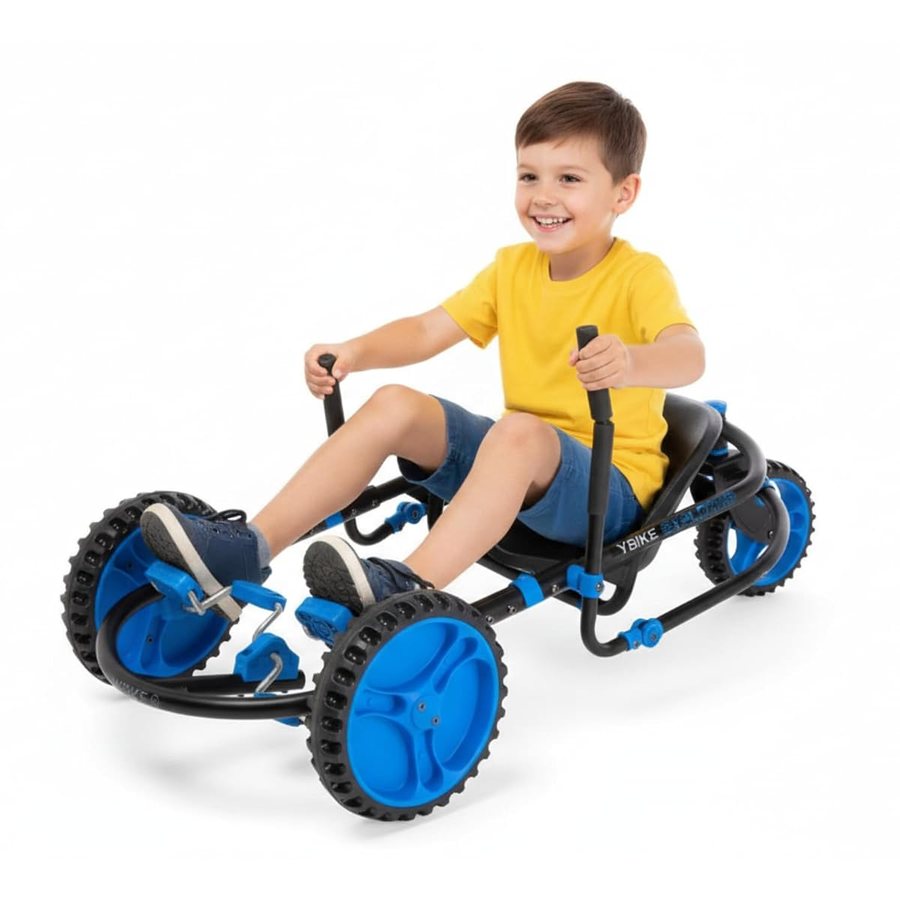
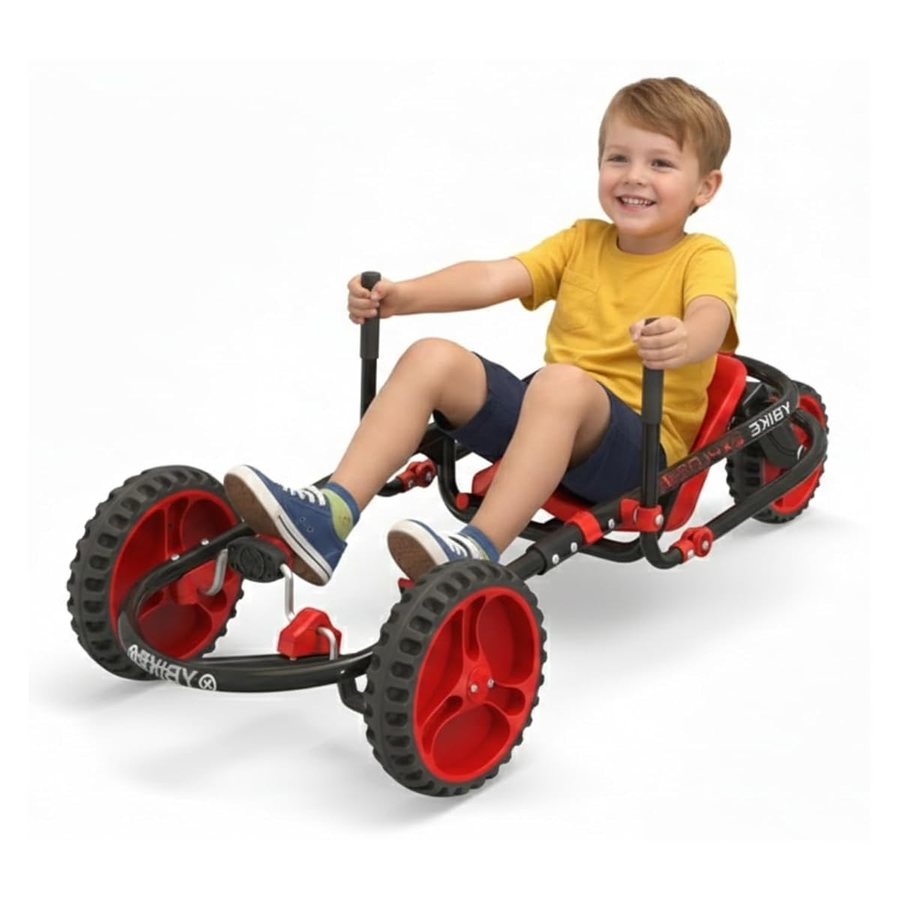
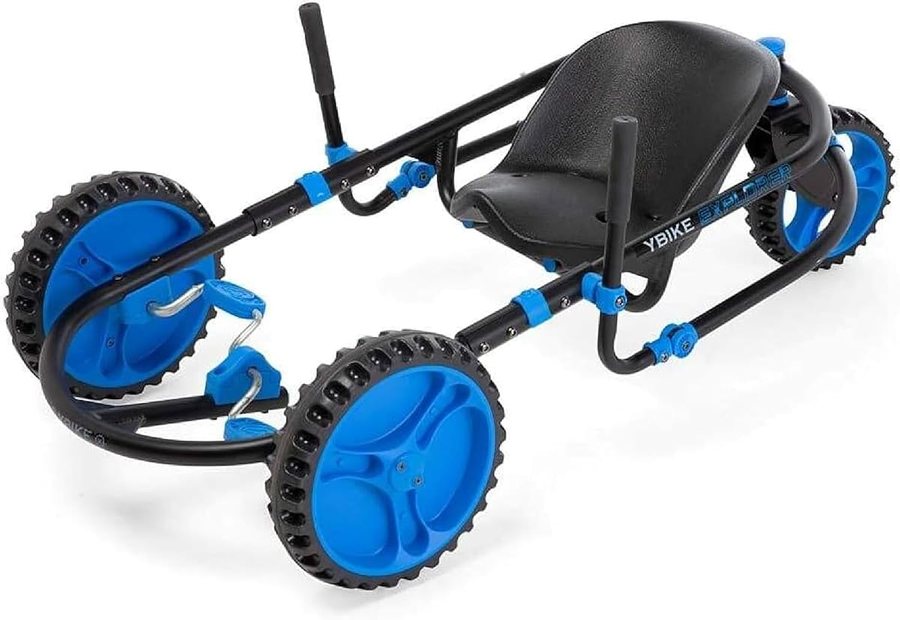
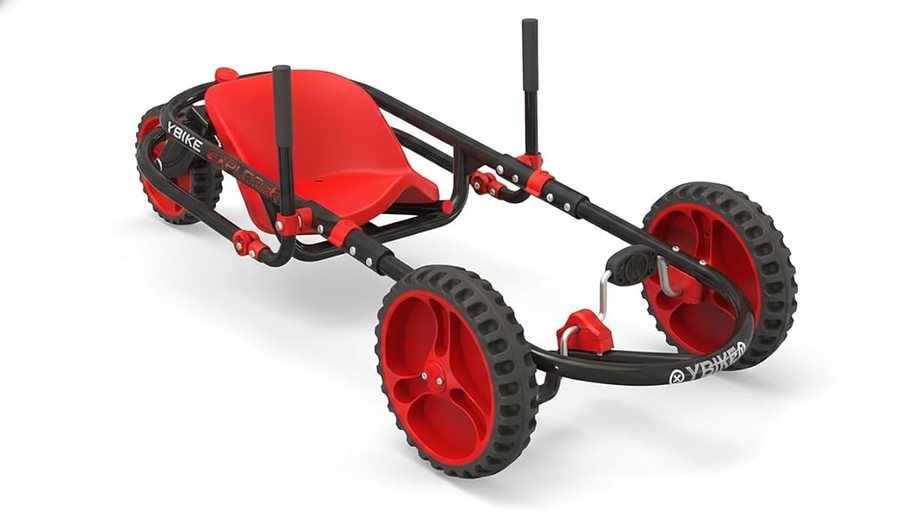
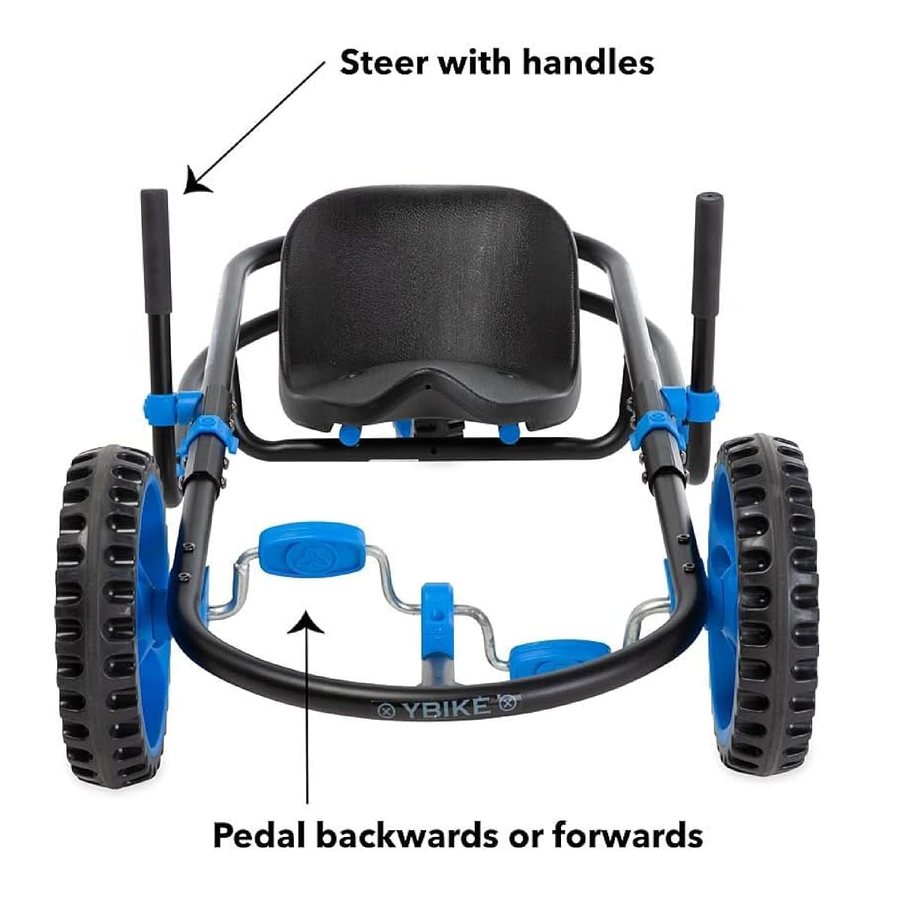
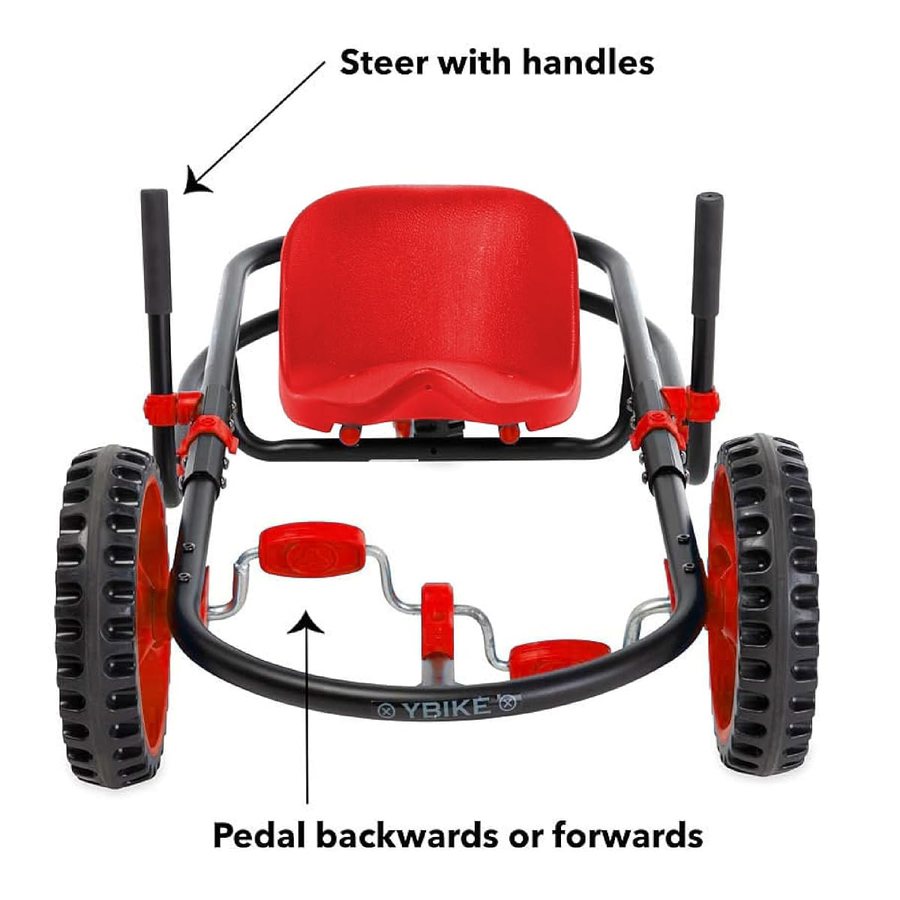
The Explorer is a three-wheel pedal car with a steering handle on each side, an adjustable frame and seat, and a hundred and fifty-five pound limit that quietly includes most adults who want a turn. The pedaling and the steering are separate jobs here, which is the opposite of a bicycle and exactly why some children find it easier — the balance problem is solved by the chassis, so all the attention goes into the corner.
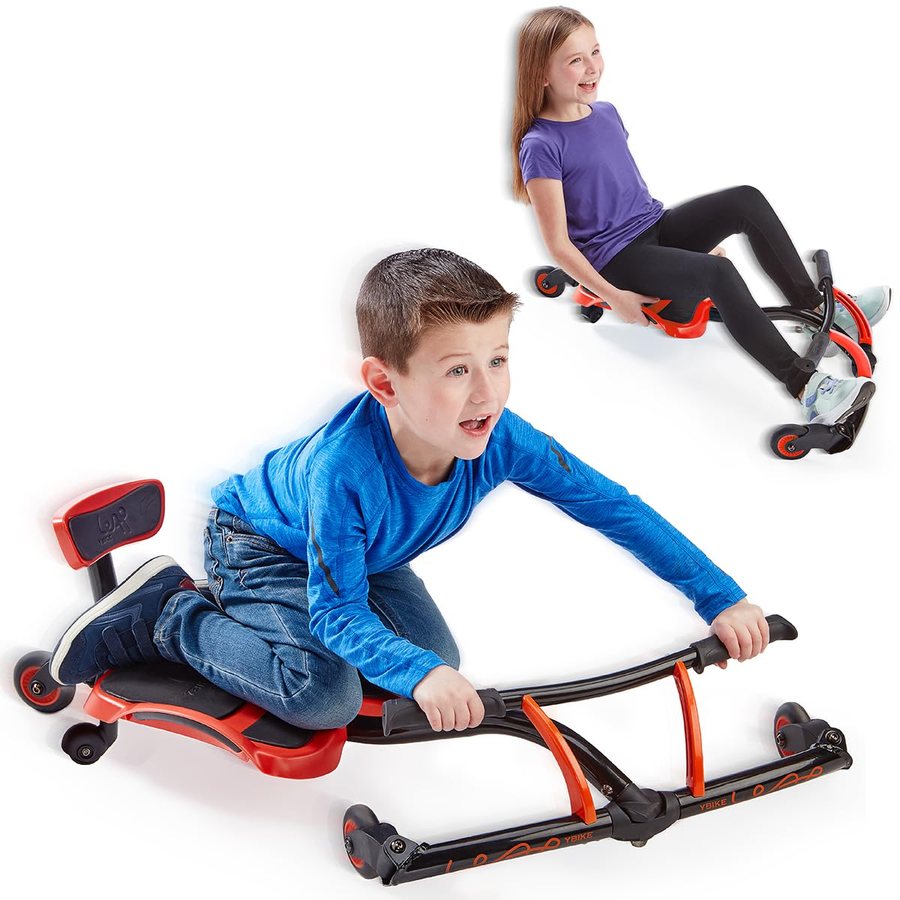
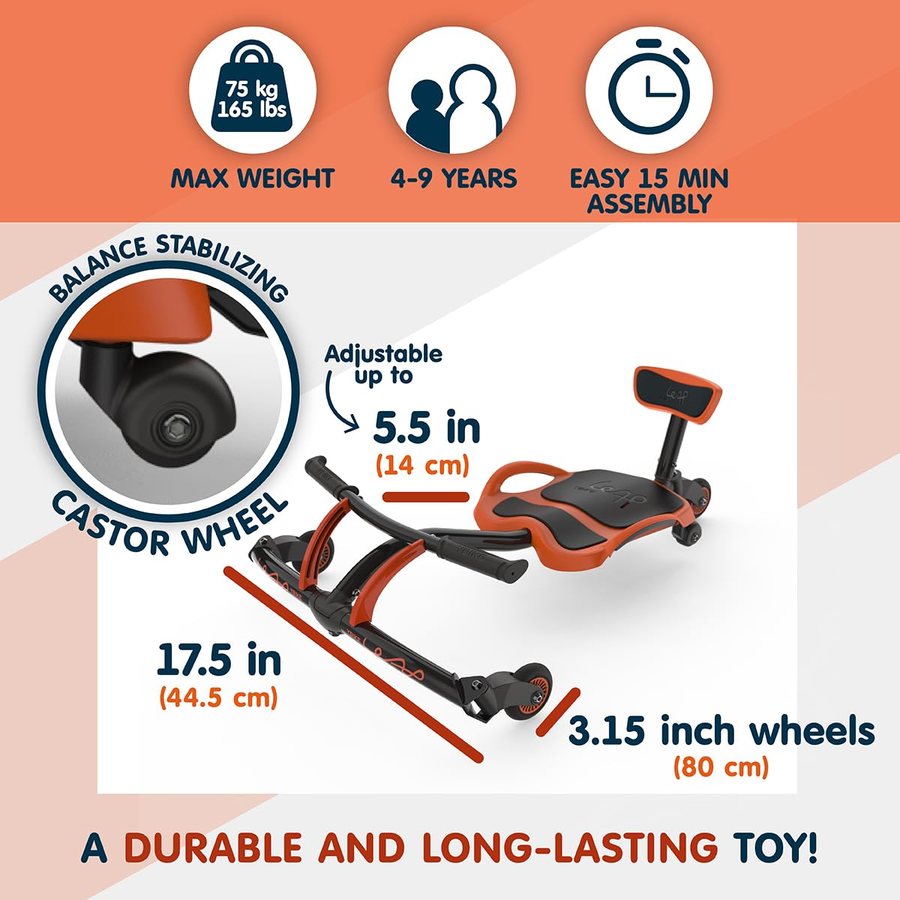
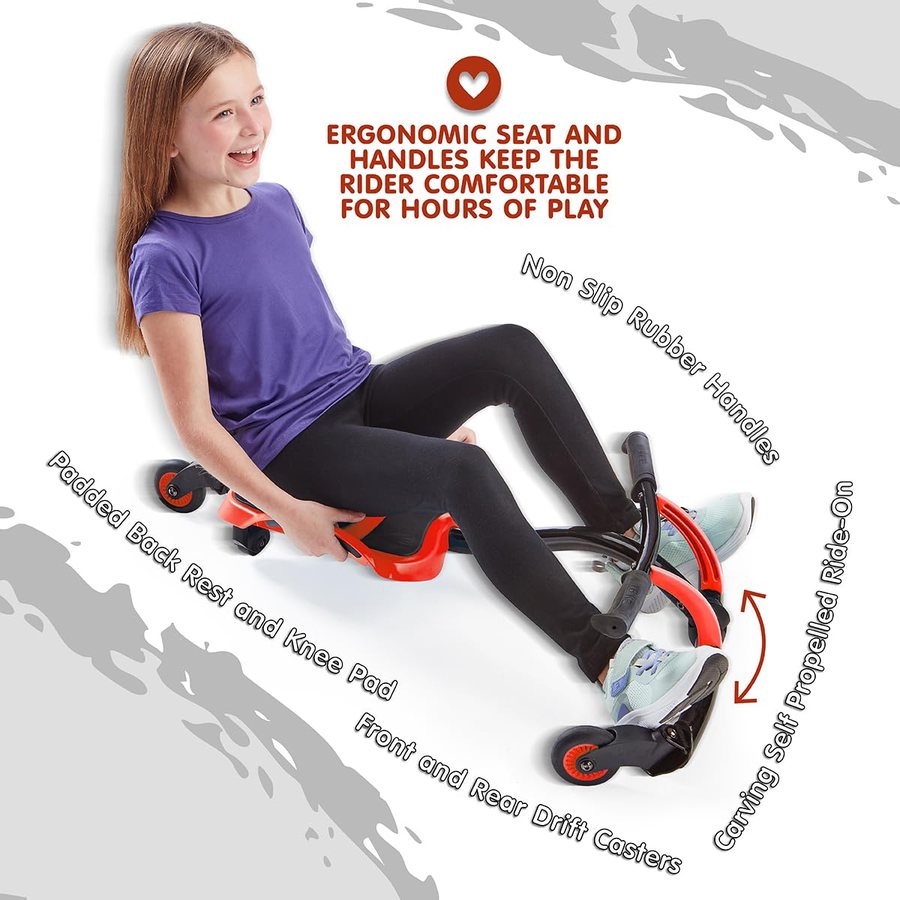
The Leap is the strange one and we like it that way. No pedals, no chain: the rider pumps the handles and four caster wheels turn that motion into a drift. It is the only machine we make that rewards sliding rather than punishing it, and it is firmly a driveway toy for ages four to nine.
Where this sits relative to a kids balance bike
A balance bike teaches the hard half of riding — the lean, the line, the constant small corrections. It does not teach legs. A pedal kart teaches the other half: a circular motion that is surprisingly unnatural the first time a child tries it, plus the leg strength to keep it going up a slope. Most riders have the balance long before they have the legs, and this is the stage where the legs catch up.
Which is why we do not treat these as a step down from two wheels. A four-year-old who already glides is not regressing by pedaling a kart; they are banking the one thing a pedal bike will ask for that a balance bike never did. Riders who arrive at a bicycle with both halves already learned tend to ride away on the first attempt.
Training wheels, by comparison, try to teach both halves at once and succeed at neither. They hold the frame upright so the lean never develops, and they put the rider at an angle where the pedals are harder, not easier. We would rather sell two honest machines than one that undoes itself.
- Three wheels and a wide track — stable without a stabiliser
- A frame and seat that adjust through several years of growing
- A hundred and fifty-five pound limit on the Explorer, adults included
- Steering handles at each side, so the hands and the legs have separate jobs
- The Leap: no pedals, no chain, four casters and a deliberate drift
Fitting the Explorer
Sit the child in the seat with the pedal at its furthest point. The knee should still be softly bent — a locked leg means the seat has gone too far back and the push comes out of the hip instead of the thigh. If the knee comes up past the hip at the near end of the stroke, the seat is too close and the rider will lose the top of every revolution.
The adjustment is a single lever and takes less than a minute, which matters because the correct position changes roughly twice a year. The seat is the part of this machine most likely to be set once and then quietly outgrown, so it is worth a look each time the shoes get replaced.
- Knee softly bent at the far end of the stroke — the seat is right
- Leg locking straight — move the seat forward one notch
- Knee above the hip at the near end — too close, move it back
- Rider can reach both steering handles without leaning forward
Where to ride, and what to wear
Flat, smooth and closed to cars. A pedal kart carries real speed downhill and has nowhere near the stopping power of a bicycle, so a slope with a blind end is the one surface we would rule out entirely. A long driveway, a quiet cul-de-sac, an empty parking lot on a Sunday morning — all ideal, all boring, all exactly what a rider at this age wants.
Helmet on, closed-toe shoes with a flat sole. At this stage children are fast enough and heavy enough that a fall has some energy behind it, and the helmet habit built at two is doing its work here. Everything else is an extra and can be a matter of taste.
Maintenance, honestly
Check the pedal cranks and the steering pivots at the start of each season, keep the wheel nuts tight, and store it dry. The chain-free design of the Leap means there is almost nothing to service beyond the casters; the Explorer wants its crank bolts looked at once a year and that is the whole list.
A steel-and-aluminum kart is durable in a way that outlasts the interest of its first rider, which is why so many of these end up on a second and third child. Look at the seat rail, the handle bolts and the tires before passing one on, replace what is worn, and expect the frame itself to be fine.
Coming here from a toddler balance toy
A toddler who started early on a four-wheel walking ride-on arrives at this stage with most of the groundwork done. The transition is about legs rather than nerve, and it typically takes a single afternoon of being shown where the pedals go. There is nothing to customize and no safety equipment to add beyond the helmet already hanging by the door.
Compared with a bicycle, a kart asks less of the rider and gives back more speed, which is exactly what a five-year-old wants. If you are considering one as a first machine rather than a second, our guide on when to start is the more helpful page — it covers sizing, the adjustable seat, and the small amount of adult support any of this actually needs. Children enjoy this stage more than any other and we have never had to explain why.
The First Lap — every finish
The First Lap in detail

What riders’ families say
Reviews belong to the listing line rather than to one color — several finishes share a single listing.
Fun ride!
“Very well made and lots of fun! Bought this for a grandson because his cousin had one. He was beyond excited!!”
Rhonda Lamb — 5 out of 5quality bike
“Got this for my grandson several years ago and he rides it daily spring, summer and fall. Bike has held up great! It is adjustable so older kids can ride it too. His aunt and grandmother have even taken a few spins on it. I wish you could by replacement tires though. My grandson likes to skid in it and it has caused one tire to were the rubber off in a spot. Would buy this bike again!”
Verified buyer — 5 out of 5Best bike ever
“Bought this for my 2 Grandsons, ages 6 and 9......they were with us for a weeks stay.......they were on the bike daily, they kept saying how much they loved the bike and that it was the best bike ever. My sister in, law also had a Y-Bike for her grandkids and we ended up borrowing it because the boys were fighting over the one bike. You won’t be disappointed in this purchase. Love that it can be adjusted for the size of the child. Highly recommend”
Verified buyer — 5 out of 5My son loves it.
“I had a red version of one of these that sat outside for a while. After exposure to the sun for a while, the plastic seat became brittle and broke into pieces. I bought another blue one which is being kept covered on the porch when not in use. All in all, it is a pretty decent little trike,and my son loves it.”
CoNiGMa — 4 out of 5